The Rise of AI SOC Agents: What Gartner's Future Outlook Means for Security Operations
Introduction
Security operations are undergoing one of the most significant transformations in their history. As threat velocity increases and environments grow more complex, the legacy SOC model is struggling to keep up. Gartner's Future Outlook for Security Operations clearly reinforces what many security leaders already feel on the front lines. The future of the SOC will be driven by intelligence, automation, and adaptive AI. At the center of that evolution sits a new category of capability known as AI SOC agents.
These agents are not incremental enhancements. They represent a structural shift in how detection, investigation, and response will operate at scale.
Where AI SOC Agents Sit in the Security Operations Hype Cycle
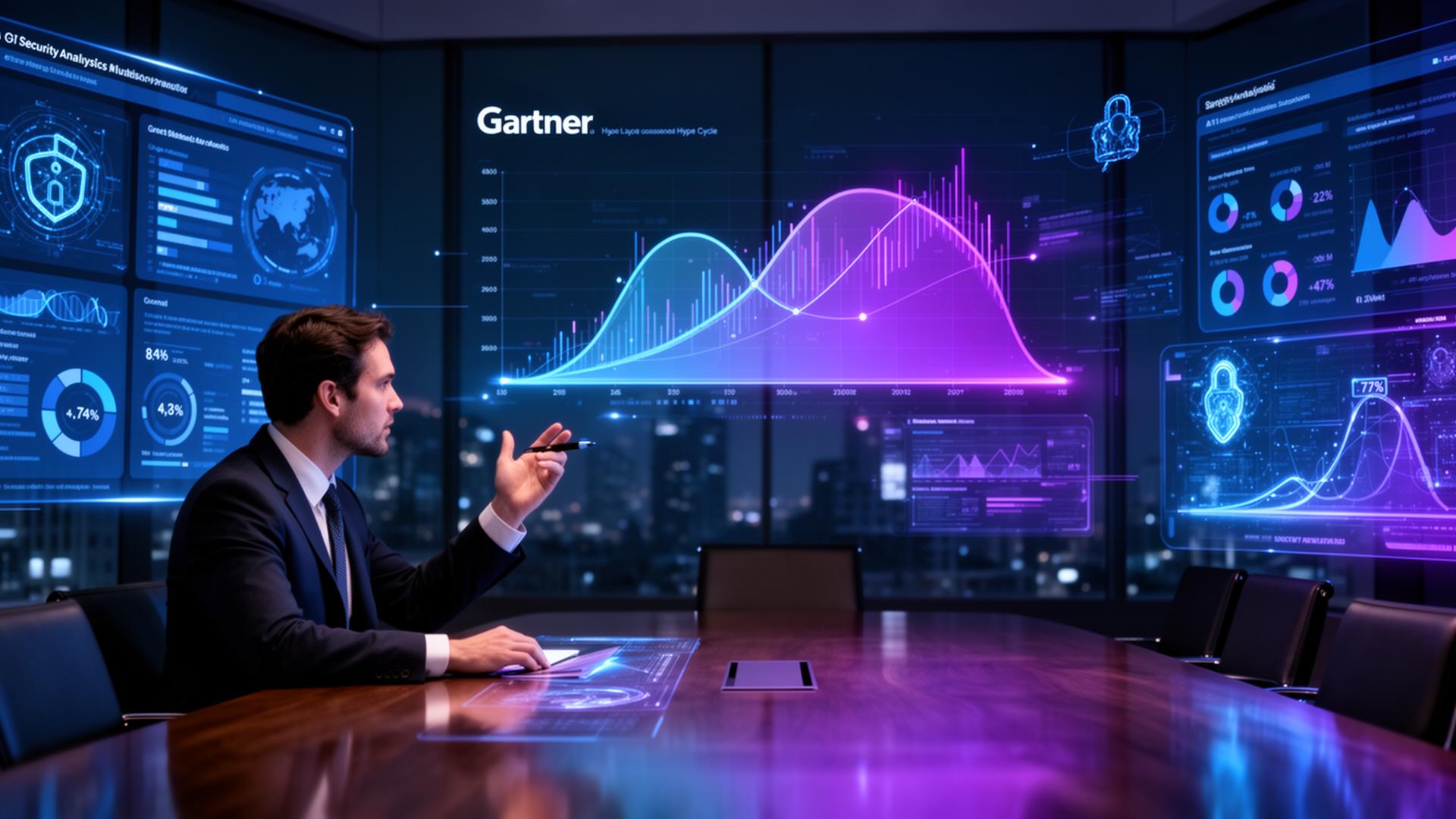
Gartner positions AI SOC agents near the Peak of Inflated Expectations on the Security Operations Hype Cycle. This placement is critical because it signals two important realities at the same time.
First, the market sees massive potential for AI driven security operations. Second, organizations must move carefully through early adoption to avoid unrealistic expectations, immature implementations, and misaligned deployments.
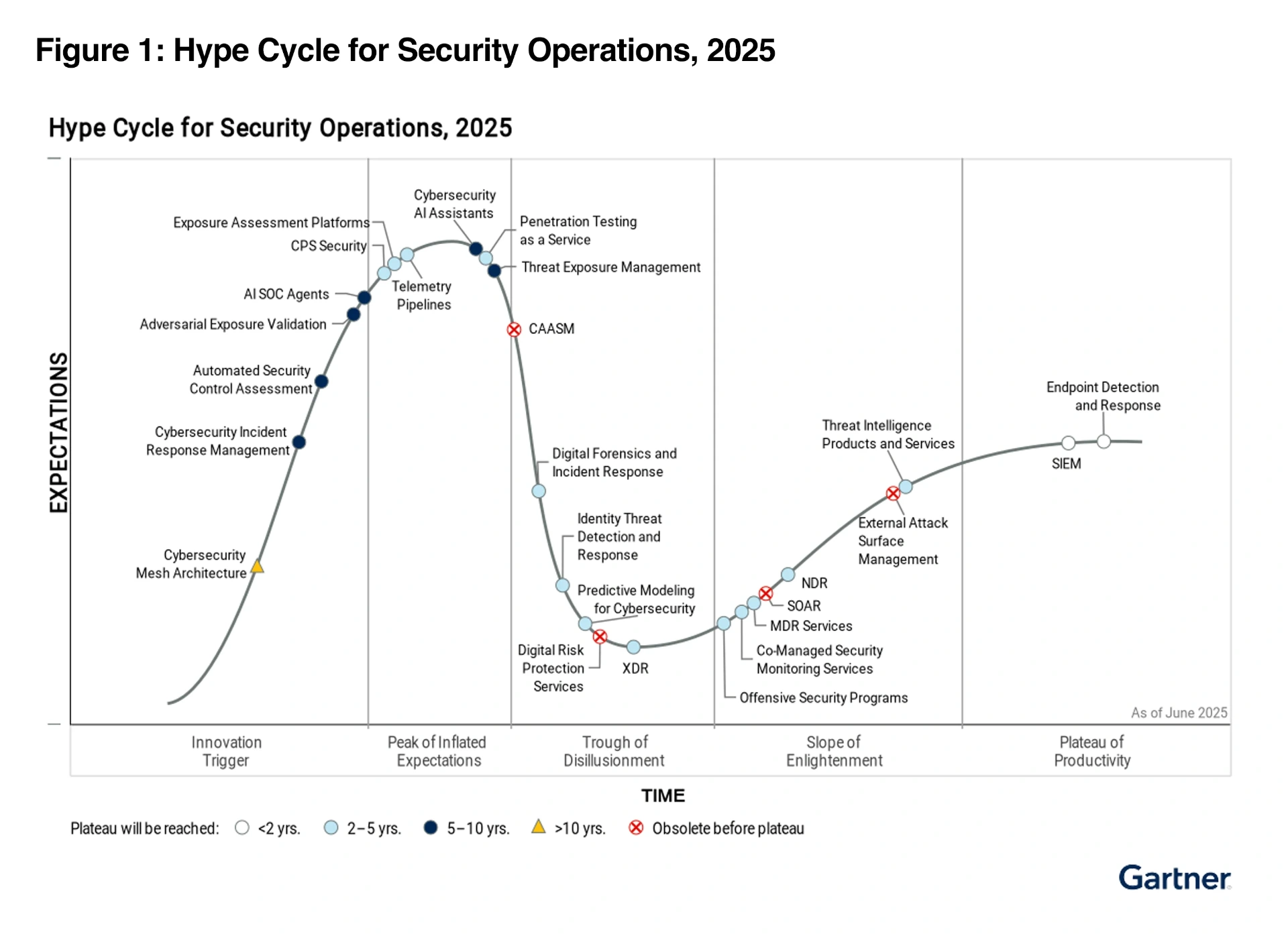
Figure 1: Gartner Hype Cycle for Security Operations, 2025
AI SOC agents appear in the same innovation band as several other advanced capabilities including:
- Telemetry pipelines
- Adversarial exposure validation
- Exposure assessment platforms
- Cybersecurity AI assistants
This clustering highlights a broader trend. The SOC is shifting from tool centric operations toward continuous intelligence, validation, and autonomous decision support.
By contrast, mature capabilities such as SIEM, Endpoint Detection and Response, and Threat Intelligence products sit far along the Plateau of Productivity. These platforms remain foundational, but they now serve as data sources that AI SOC agents build upon rather than operate independently.
What This Positioning Means for Security Leaders
Gartner's placement of AI SOC agents indicates that organizations should expect:
- Rapid innovation over the next several years
- High vendor activity and architectural experimentation
- Significant operational improvements when deployed correctly
- Equally significant risks when deployed without proper data, governance, or oversight
This is not a signal to delay adoption. It is a signal to adopt intelligently with strong guardrails and measurable outcomes. For a foundational understanding of these systems, see our guide explaining what AI SOC agents are and how they work.
Security leaders who begin piloting AI SOC agents during this phase gain operational advantages long before the technology reaches widespread maturity.
Why AI SOC Agents Represent a Structural SOC Shift
Traditional automation focuses on execution. AI SOC agents focus on reasoning.
Instead of only triggering predefined workflows, AI SOC agents:
- Evaluate behavioral intent
- Correlate evidence across identity, cloud, endpoint, and network
- Prioritize threats based on real business risk
- Continuously refine decisions based on outcomes
AI SOC Agent Core Capabilities
Moving from execution to reasoning
Evaluate Intent
Analyzes behavioral patterns to understand attacker objectives and tactics
Correlate Evidence
Connects signals across identity, cloud, endpoint, and network in real time
Prioritize Threats
Ranks incidents based on real business risk and potential impact
Refine Decisions
Continuously learns from outcomes to improve detection and response accuracy
From Tools to Intelligence
Traditional automation executes predefined workflows. AI SOC agents reason through complex scenarios, adapt to evolving threats, and improve with every incident. This is the fundamental shift Gartner highlights—moving from tool-centric operations to intelligence-driven defense.
Gartner's outlook reinforces that future SOC effectiveness will be measured less by alert volume and more by decision velocity, investigation quality, and containment precision.
This is where AI agents become essential.
The New Operating Model of the AI-Driven SOC
The future SOC described by Gartner is no longer a room of analysts buried under alerts. It becomes an intelligence command center powered by continuous analytics and autonomous reasoning.
The New Operating Model
From alert-buried analysts to intelligence command center
Traditional SOC
Human-Centric Operations
Result: Slow response, analyst burnout, limited scale
AI-Driven SOC
Intelligence Command Center
Result: Machine-speed response, empowered analysts, unlimited scale
The Shift: From Reactive to Proactive
Analysts evolve from alert responders to threat strategists, control governors, and business-aligned defenders. AI handles the noise—humans guide the strategy.
The analyst role does not disappear. It evolves upward.
Instead of reacting to noise, analysts become threat strategists, control governors, and business aligned defenders.
Risks Gartner Signals Organizations Must Control
Gartner's outlook also makes clear that not all AI implementations deliver true SOC transformation. The largest risks include:
- Overreliance on immature automation
- Poor telemetry coverage that limits AI accuracy
- Lack of explainability in AI driven actions
- Weak governance over autonomous response
- Vendor marketing outpacing real operational capability
Organizations that deploy AI SOC agents without addressing these risks may experience faster operations, but not necessarily better security.
The goal is not speed alone. The goal is trusted, measurable, controlled intelligence at scale.
How This Hype Cycle Connects to Broader SOC Evolution
The Hype Cycle illustrates a layered future SOC architecture where AI SOC agents operate alongside and above several existing security disciplines including:
- SOAR
- XDR
- MDR
- Identity threat detection
- Digital risk protection
- External attack surface management
This confirms that AI SOC agents will not replace these capabilities. They will orchestrate them.
The future SOC is not a monolithic platform. It is a coordinated intelligence fabric.
How NextSOC Aligns with Gartner's Security Operations Direction
NextSOC is architected for this exact transition.
Our intelligence driven SOC model directly aligns with the future Gartner signals on the Hype Cycle:
- AI at the center of investigation and response
- Continuous telemetry ingestion and normalization
- Autonomous enrichment across threat intelligence and behavior analysis
- Human governed response orchestration
- Outcome first security operations instead of tool dependency
Rather than bolting AI onto existing workflows, NextSOC builds workflows around intelligence from the start.
How Security Teams Should Prepare for This Transition
Organizations preparing for this Gartner driven SOC future should focus on six fundamentals:
- Normalize telemetry across all control planes
- Reduce detection noise before introducing automation
- Define outcome metrics such as MTTD, MTTR, and analyst efficiency
- Pilot AI SOC agents in scoped detection domains
- Maintain human approval and auditability
- Continuously validate AI outputs against real incidents
Security teams that adopt this approach align with both Gartner's long range outlook and proven operational discipline.
The Bottom Line
Gartner's Security Operations Hype Cycle sends a clear signal. The future of the SOC will be built on adaptive intelligence, autonomous analysis, and governed automation. AI SOC agents are emerging as the control layer that will unify these capabilities into a single operational command fabric.
This is not a temporary market surge. It is the early foundation of how security operations will function for the next decade.
At NextSOC, this future is not theoretical. It is exactly what we are building toward. Intelligence at the core. Automation at scale. Humans in control. Outcomes as the measure of success.