The Future of AI-Powered Threat Detection
Introduction
Cybersecurity teams are facing pressure unlike anything seen before. SOC analysts are overwhelmed by alert fatigue, staffing shortages continue to grow, and attackers are using automation and AI driven tactics that move faster than human centric detection models can respond. Even established MDR and XDR providers are struggling with scale, visibility gaps, and high analyst workload. Compliance complexity adds further operational strain, leaving organizations exposed in ways traditional models were never designed to handle.
This shift has made it clear that conventional detection and response approaches can no longer keep pace. The next evolution of cyber defense requires systems that operate at machine speed, correlate threats across every environment automatically, and reduce noise instead of amplifying it. AI powered threat detection represents this new frontier.
AI-Powered Detection Advantages
How AI transforms threat detection capabilities
Alerts/Day
Large enterprises receive thousands of alerts daily—analysts can only investigate a fraction
Detection Speed
AI compresses detection and response from hours to minutes
Data Points
AI analyzes patterns across millions of data points in real time
Kill Chain Detection
AI catches attacks earlier in the kill chain before damage occurs
The Growing Challenge for Traditional Security
Security operations centers have reached a breaking point. Modern environments generate enormous volumes of telemetry across cloud services, identities, endpoints, network devices, and SaaS platforms. Traditional SIEM based workflows cannot handle this scale without significant human involvement.
Industry studies from IBM, Google Cloud, and Gartner show that large enterprises receive thousands of alerts per day, although analysts can only investigate a small percentage. This results in several challenges:
- Missed or delayed detection of high risk threats
- Excessive time spent on low value investigations
- Slow response cycles and reduced containment effectiveness
- Increased analyst burnout and turnover
- Fragmented visibility across hybrid and cloud environments
Legacy detection stacks were simply not built for today's operational tempo.
How AI Is Transforming Threat Detection
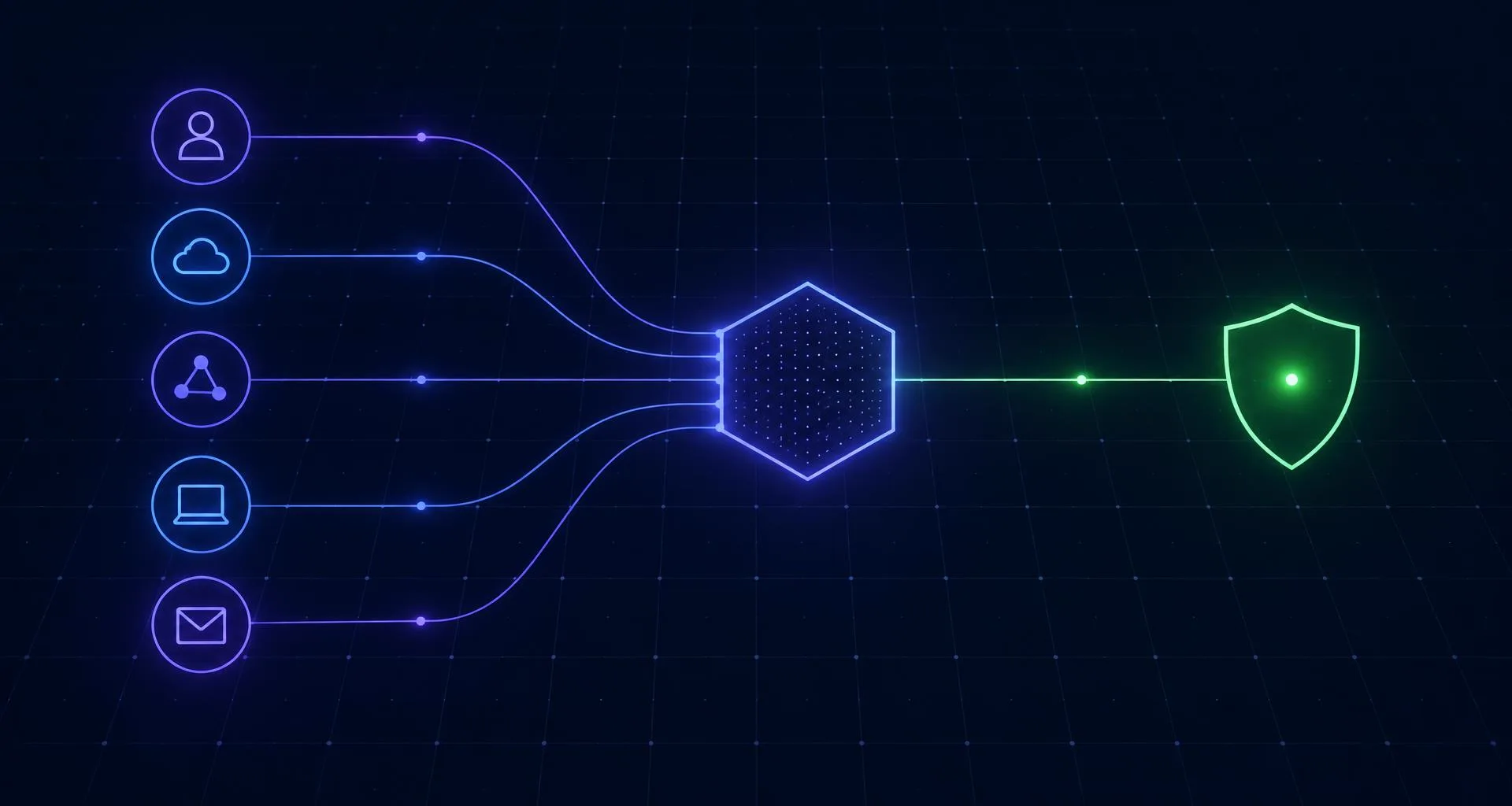
AI introduces capabilities that fundamentally change how organizations detect and respond to threats. By analyzing patterns across millions of data points in real time, AI systems can perform tasks that would take human analysts hours or days.
Key advantages include:
- Identifying subtle behavioral anomalies that rules and signatures miss
- Automatically correlating signals across endpoints, networks, identities, and cloud platforms
- Enriching alerts with context for faster investigation
- Reducing false positives by interpreting activity in full context
- Accelerating triage by ranking threats by risk and impact
AI does not replace analysts. It removes the noise that keeps them from focusing on the threats that matter.
Why MDR Is Struggling to Scale
Managed Detection and Response was created to help organizations outsource 24 by 7 monitoring and investigation. While MDR remains valuable, the model is showing limitations as environments and threats become more complex.
The challenges now facing MDR include:
- Heavy reliance on human analysts who cannot scale at machine speed
- Slow triage cycles due to manual investigation workflows
- Difficulty keeping up with cloud, identity, and SaaS telemetry
- Alert fatigue that carries over from customer environments
- Increasing attacker use of automation and AI, reducing human reaction time
- High turnover and hiring challenges across the cybersecurity industry
MDR providers are working harder every year to keep pace, but the human centric structure makes true real time response increasingly difficult.
Why XDR Is Falling Short
Extended Detection and Response was positioned as the evolution beyond SIEM, offering cross domain visibility by unifying telemetry from endpoints, cloud workloads, identities, networks, and email platforms. But XDR platforms also face significant obstacles:
- Massive data ingestion requirements that slow investigations
- Visibility gaps when customers lack full integration across tools
- Heavy dependence on analysts to interpret correlated alert chains
- Difficulty adapting detection logic to rapidly changing attacker techniques
- Limitations in automated response across multi vendor ecosystems
Even with AI enhancements, XDR remains a detection tool rather than a fully autonomous investigation and response engine.
Why a New Approach Is Needed
Organizations no longer need more alerts or more dashboards. They need a system that:
- Understands threats in real time
- Correlates activity across every domain automatically
- Produces investigations without human prompting
- Reduces noise instead of repackaging it
- Delivers response actions at machine speed
- Adapts dynamically as attackers evolve their techniques
- Supports teams facing staffing shortages and budget pressures
The limitations of MDR and XDR platforms highlight an urgent need for a solution built from the ground up to be autonomous, adaptive, and AI driven. This next generation approach integrates detection, correlation, investigation, and response into a single continuous intelligence process.
Traditional vs AI-Powered Detection
Why conventional approaches are falling behind
Detection Speed
Alert Correlation
False Positive Rate
Response Actions
Scalability
Key insight: MDR and XDR were important steps, but they weren't built for an era of machine-speed attacks and global talent shortages.
The Impact of AI First Security Models
Organizations that adopt AI powered security systems are seeing measurable improvements:
- Detection accuracy increases significantly due to behavioral understanding
- Response times drop from hours to minutes
- Analysts spend less time on low value triage
- Blind spots across cloud and hybrid environments shrink
- Overall resilience improves against modern threat actors
Research from Forrester and Gartner confirms that AI driven security dramatically reduces dwell time and improves the likelihood of catching attacks earlier in the kill chain.
Looking Ahead: The New Era of Cyber Defense
AI is shifting cybersecurity from reactive to predictive. Future systems will:
- Detect emerging attacker behavior before compromise
- Automatically investigate suspicious activity
- Orchestrate containment without waiting for human approval
- Leverage identity, cloud, and behavioral analytics in real time
- Continuously learn and adapt as threats evolve
MDR and XDR played an important role in the earlier stages of modern security, but they were not built for an era defined by machine speed attacks and global talent shortages. The future belongs to autonomous, AI powered platforms that combine detection, investigation, and response into one seamless capability.
Organizations that embrace this evolution will gain stronger protection, faster response, and a more resilient security posture in an increasingly complex threat landscape.