AI SOC Agents vs Traditional SOC Tools: What's the Difference?
Introduction
Security operations teams are under unprecedented pressure. Organizations are dealing with explosive growth in alert volume, increasingly automated threat actors, and a persistent global shortage of skilled professionals. According to the Ponemon Institute, the average security operations team investigates more than 11,000 alerts per day, yet up to 53 percent of those alerts are never examined due to workload constraints. SOC leaders need solutions that improve investigation quality, reduce workload, and help teams respond faster.
This article compares two approaches to modern security operations: traditional SOC tools like SIEM and SOAR platforms and the emerging class of technology known as AI SOC agents. By understanding the differences in architecture, operational impact, and outcomes, security leaders can make more informed decisions about how to evolve their defenses.
The State of Security Operations
Industry research reveals critical challenges facing modern SOC teams
What Traditional SOC Tools Are
Traditional SOC environments are built on a combination of core systems that support visibility, management, and response workflows.
SIEM Platforms
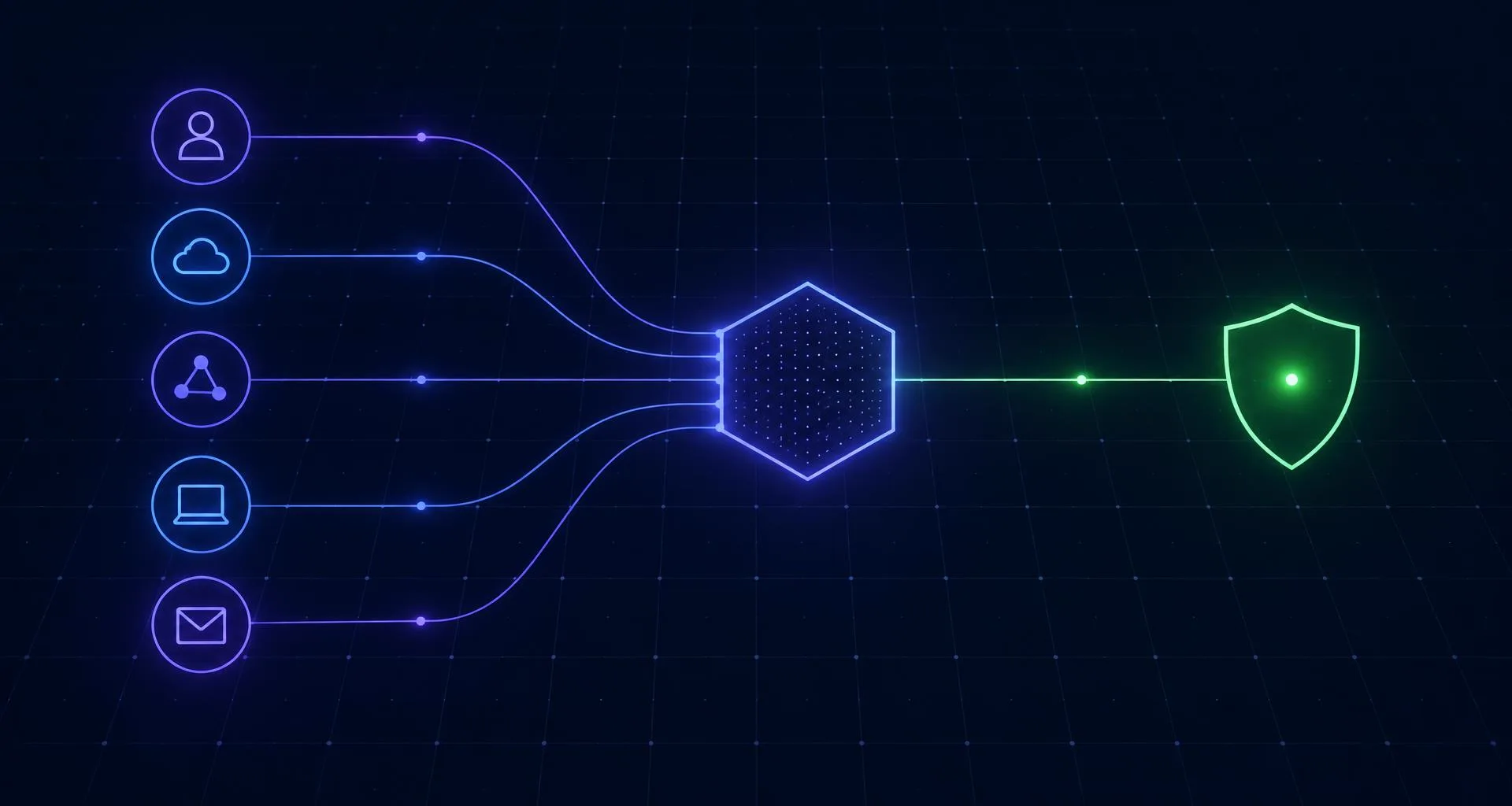
Security Information and Event Management (SIEM) platforms collect and index logs from endpoints, networks, identity systems, cloud environments, and more. They apply correlation rules to generate alerts when predefined conditions are met. SIEMs are critical for compliance reporting and centralized visibility, but they often generate large volumes of alerts with limited context.
According to Gartner, enterprise organizations typically see thousands to tens of thousands of security events daily, and analysts frequently struggle to identify which require investigation.
SOAR Platforms
Security Orchestration, Automation, and Response (SOAR) platforms automate standardized tasks such as enriching alerts, creating tickets, and triggering response playbooks. SOAR is effective for known workflows, but it still depends on humans for event interpretation and for updating playbooks as threats evolve.
A SANS Institute study found that SOAR automation accelerates response times for repetitive tasks, but that 61 percent of SOC teams still report persistent investigation bottlenecks.
Analyst Driven Investigation
In traditional SOCs, human analysts perform triage, correlation, and deep investigation manually. According to the 2024 ISC2 Cybersecurity Workforce Study, the global shortage of cybersecurity professionals exceeds 4 million open roles, and SOC analyst positions are among the hardest to fill. Analysts often spend 30 to 50 percent of their time on low value alert triage rather than higher level threat hunting or strategic work.
Structural Challenges with Traditional SOC Tools
Industry research highlights critical operational gaps
Alert Overload
Large SOC environments generate more alerts than analysts can handle. Up to 70% may be false positives.
Source: Splunk Research
Manual Correlation
Analysts must manually stitch together disparate data, leading to delayed detections and missed signals.
Source: Ponemon Institute
Inconsistent Decisions
Two analysts may reach different conclusions reviewing the same incident without structured support.
Source: Industry Analysis
Slow Response
Attacks often go undetected for an average of 277 days—a timeframe traditional workflows struggle to reduce.
Source: IBM Cost of Data Breach
Staffing Constraints
Analysts spend 30-50% of their time on low-value alert triage instead of strategic work.
Source: ISC2 Workforce Study
Investigation Bottlenecks
Even with SOAR automation, 61% of SOC teams still report persistent investigation bottlenecks.
Source: SANS Institute
What AI SOC Agents Are
AI SOC agents represent an evolution in security operations. Rather than generating alerts for human review, these systems are designed to investigate alerts end to end, correlate evidence across systems, and provide structured conclusions or recommended actions. To learn more about how AI SOC agents work, see our comprehensive guide.
AI SOC agents apply machine learning, contextual reasoning, and domain specific security logic to threats. According to McKinsey research on AI applications in security, organizations that integrate AI into operations can reduce incident response times by 40 to 70 percent and improve detection coverage.
AI SOC agents are not generic chat based assistants. They are built specifically for security workflows and operate within defined contexts and constraints to ensure relevance and trustworthiness.
Key Architectural Differences
How AI SOC agents compare to traditional SOC tools across critical dimensions
The Fundamental Shift
AI SOC agents transform security operations from alert generation to investigation and decision support. Organizations integrating AI into operations can reduce incident response times by 40-70% and improve detection coverage significantly.
Operational Impact
Detection and Response Speed
In traditional SOC environments, initial triage may take minutes per alert, and response actions may be delayed by hours or longer. According to the SANS Institute, median time to respond to a significant event in large SOCs is several hours, largely due to manual workflows.
AI SOC agents are designed for rapid analysis. Many real world implementations report sub minute decision cycles for high trust alerts, enabling faster containment and discovery of broader attack patterns.
Alert Coverage
Traditional SOCs often prioritize high severity alerts, leaving lower severity events unexplored. This leaves potential early indicators of compromise uninvestigated. AI SOC agents have the capacity to evaluate all alerts with context, increasing visibility into full attack sequences.
Analyst Efficiency
By automating routine investigation tasks, AI SOC agents allow human analysts to concentrate on strategic decision making, threat hunting, and hypothesis driven investigations. This improves productivity and can reduce burnout, which remains a major challenge in SOC teams worldwide.
Operational Impact
Measurable improvements when transitioning from traditional tools to AI SOC agents
Detection & Response Speed
Initial triage per alert, response delayed by hours or longer
Sub-minute decision cycles for high-trust alerts
Alert Coverage
Only high-severity alerts investigated thoroughly
All alerts evaluated with context and correlation
Analyst Efficiency
Time spent on low-value alert triage
Automated routine investigation tasks
Cost Predictability
Scales with data volume, unpredictable during incidents
Aligned with monitored environments, not alert volume
Cost and Scalability Considerations
Traditional SOC pricing often scales with data volume or alert count, which can lead to unpredictable costs, especially during incident spikes. According to industry pricing analyses, ingestion based pricing models can inflate operational spend when telemetry grows.
Modern AI based SOC platforms increasingly align pricing with monitored environments, use cases, or outcomes rather than raw alert volume, making long term budgeting more predictable and enabling SOCs to scale without proportional cost increases.
Where Traditional SOC Tools Still Fit
Traditional tools are not obsolete. SIEMs remain essential for log aggregation, compliance reporting, and forensic evidence retention. SOAR platforms are effective for deterministic automation when event context is clear and predictable.
For organizations with low alert volumes, mature infrastructure, or limited cloud complexity, traditional approaches may suffice. However, as environments become more dynamic and threats more automated, the limitations of manual and rule based workflows become more apparent.
How AI SOC Agents Complement Existing Investment
AI SOC agents are designed to integrate with the existing security stack rather than replace it. They ingest logs and alerts from SIEMs, use SOAR connectors for action orchestration, and collaborate with other systems to create a unified investigation experience.
This layered approach allows organizations to preserve existing investments while modernizing the investigative and decision making layer of security operations.
Role of Explainable Intelligence
One of the hallmarks of effective AI SOC agents is the use of explainable intelligence. Rather than opaque outputs, these systems provide traceable context and evidence with each decision. This transparency aligns with regulatory expectations and supports audit requirements.
Industry analysts emphasize that trustworthy AI systems in cybersecurity must provide both performance and explainability to be operationally useful.
Conclusion
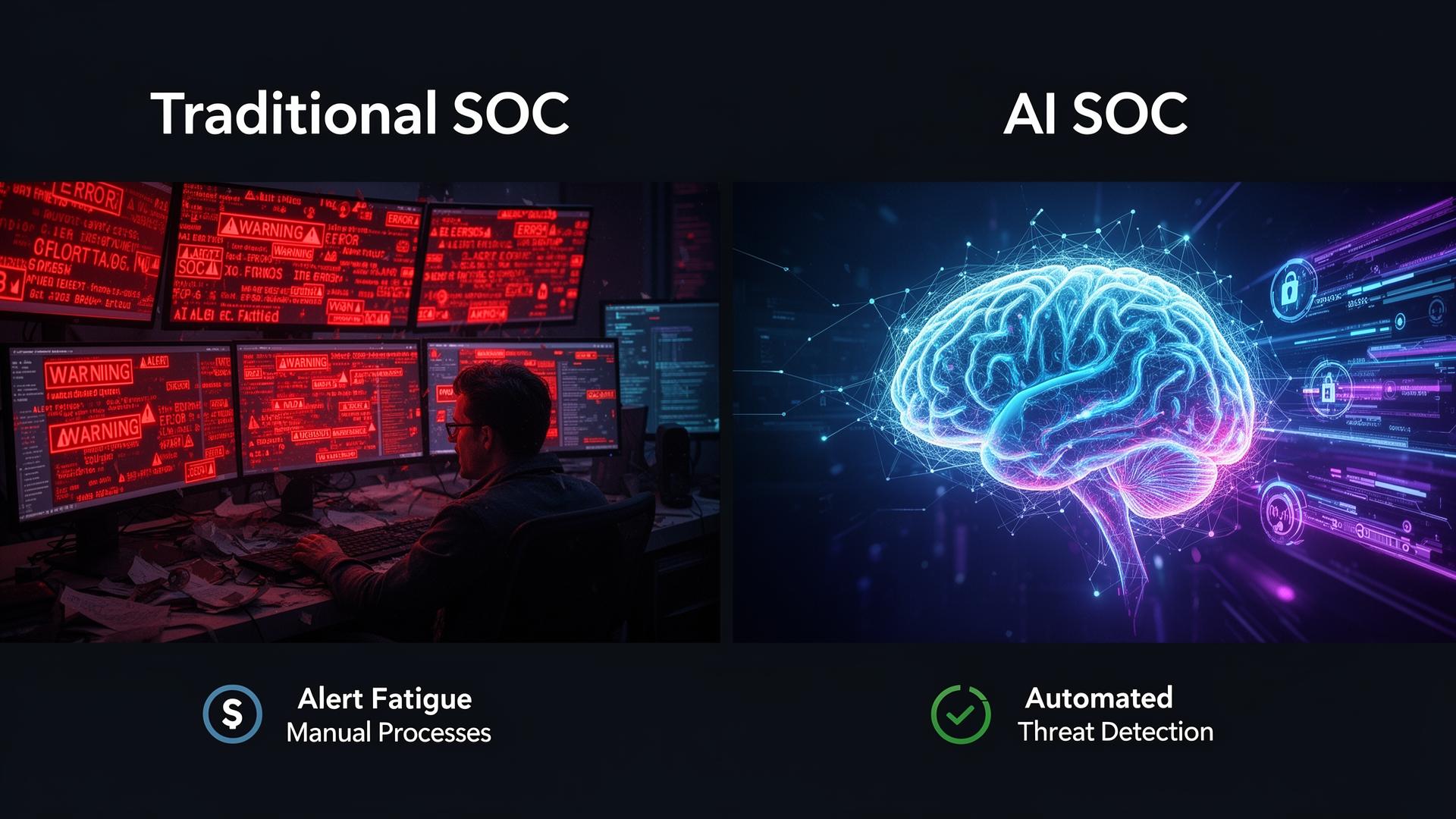
The difference between traditional SOC tools and AI SOC agents is not superficial. It reflects a shift from alert generation to investigation and decision support. Traditional tools remain valuable for visibility and compliance, but they struggle to scale investigation quality or reduce analyst burden in modern environments.
AI SOC agents provide a path to faster, more consistent, and more scalable security operations by automating investigation workflows, reducing noise, and enabling deeper context correlation. Organizations looking to evolve their SOC postures should evaluate both technology capabilities and operational outcomes as part of a deliberate modernization strategy.