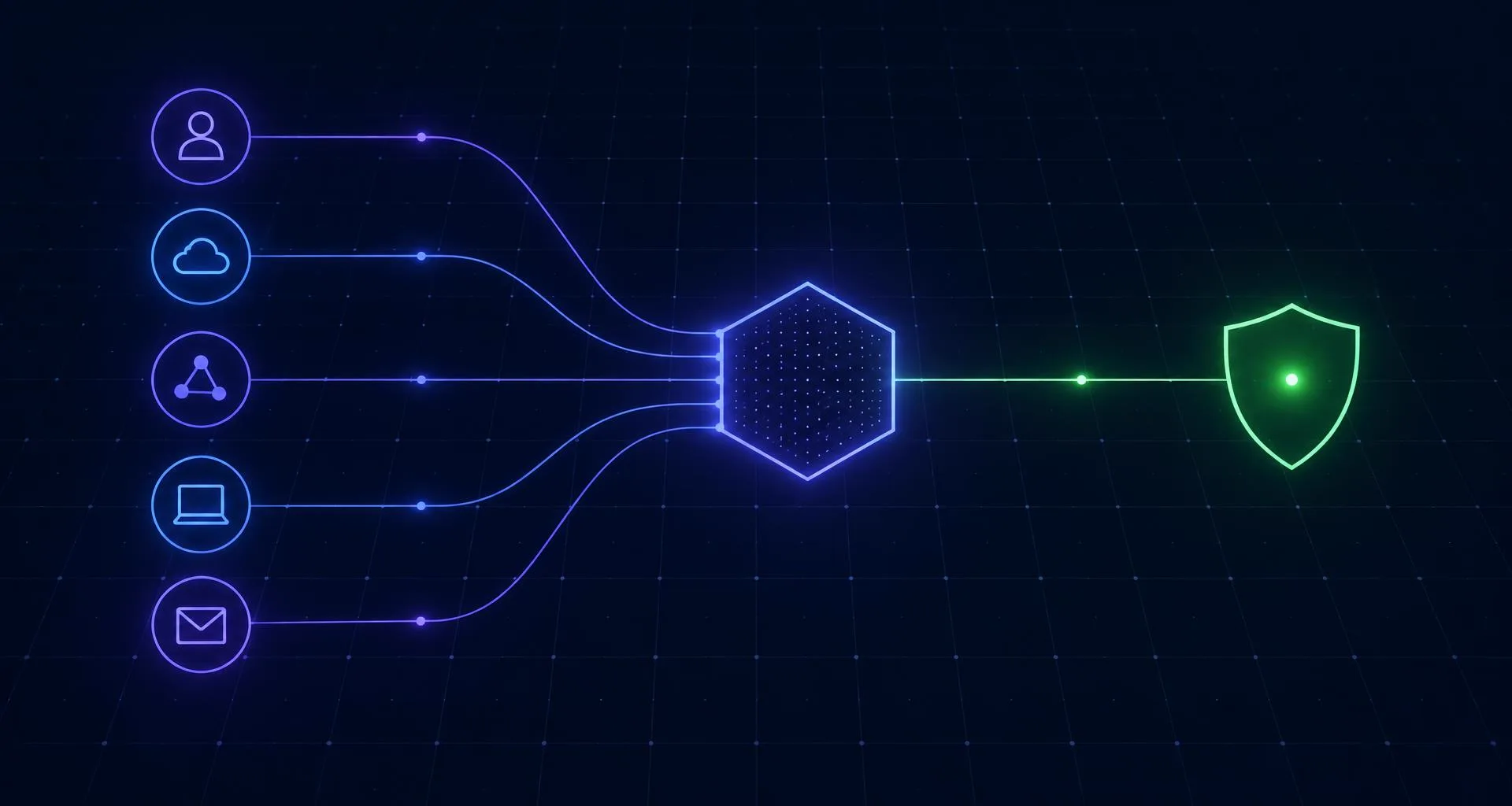
Case Study: Simulating a Mid-Market SOC Powered by NextSOC AI
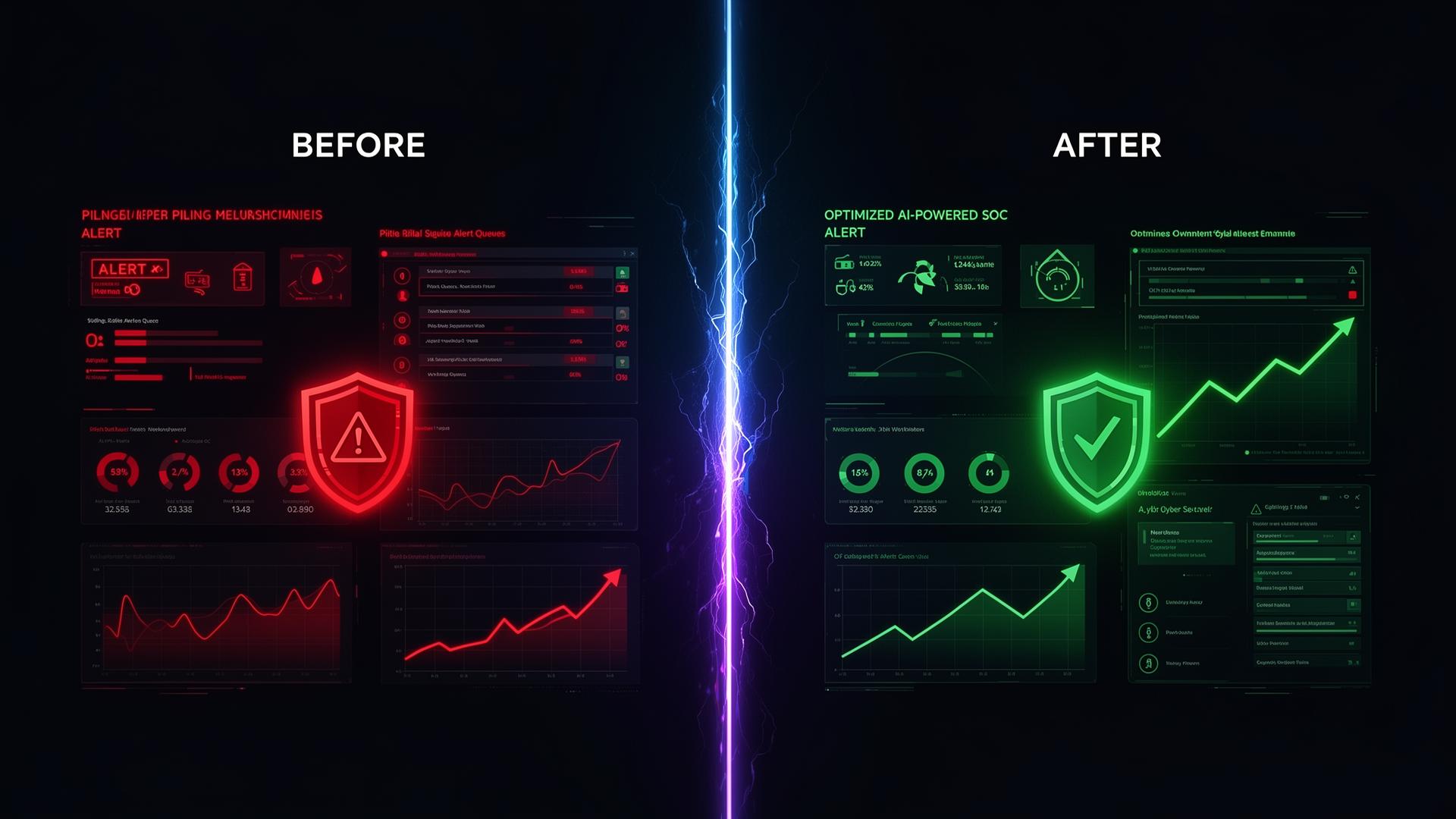
We modeled a real-world mid-market SOC and ran every alert through NextSOC. The results reveal what security leaders have been missing.
Why We Built This Simulation
Security leaders across mid-market enterprises face a difficult reality. Their teams are skilled, dedicated, and consistently overwhelmed. Alert volumes continue to climb while headcount stays flat. Budgets are under pressure. Analyst burnout is driving turnover at record rates. And every uninvestigated alert represents a potential breach that leadership will eventually have to answer for.
We wanted to answer a straightforward question: what happens when you take a SOC that looks like most mid-market security teams and run their exact workload through NextSOC AI Agents? Not a theoretical projection. Not a vendor pitch. A side-by-side simulation using the same alerts, the same volume, and the same severity distribution.
The profile we modeled mirrors what we consistently see across organizations in healthcare, financial services, manufacturing, and technology. A team doing the work, operating at capacity, and still falling behind.
SOC Profile Overview
Team Size
20 analysts
Avg Hourly Rate
$65
Monthly Alert Volume
2,000
Estimated FP/TP Split
75% FP / 25% TP
FP Response Time
18 min avg
TP Response Time
45 min avg
This profile represents a composite based on industry benchmarks from Ponemon Institute, SANS, and IBM Security research. Individual SOC environments will vary based on tooling, alert fidelity, and operational maturity.
The Current State: Where the Time and Money Go
Before introducing NextSOC into the simulation, we measured the baseline. This is what a 20-analyst team looks like when processing 2,000 alerts per month using traditional tools and manual investigation workflows. The numbers are sobering — but they are not unusual. Most CISOs and security directors we speak with recognize this pattern immediately.
The biggest cost driver is not the true positives. It is the false positives. Your most expensive resource — trained security analysts — are spending the majority of their hours chasing alerts that turn out to be noise. Meanwhile, genuine threats sit in the queue waiting for attention. And a significant percentage of alerts, both false and true positives, are never investigated at all. They age out, get auto-closed, or simply never make it to the front of the line.
For executive leadership and board-level reporting, this creates a visibility gap. You cannot report confidently on your security posture when nearly a quarter of all alerts go untouched. Compliance auditors, cyber insurance underwriters, and regulatory bodies are increasingly asking for evidence that alerts are being investigated and resolved in a timely manner. The current model makes that nearly impossible to guarantee.
Where Analyst Hours Go Each Month
Total monthly analyst hours consumed by alert investigation alone. This does not include time spent on threat hunting, compliance reporting, tool maintenance, or strategic initiatives.
Alert Coverage Gap
never investigated
Every one of those 75 uninvestigated true positives represents a potential missed breach. In a regulatory environment where disclosure timelines are tightening and penalties are increasing, this is not just an operational issue. It is a business risk that security leaders own.
$53,625
Monthly Investigation Cost
825 hrs
Monthly Hours Burned
450
Uninvestigated Alerts
It is worth noting that these costs reflect investigation time only. They do not account for escalation overhead, incident response, remediation, or the downstream cost of a breach that originated from an uninvestigated alert. The true cost of the current model is significantly higher than what this simulation captures.
Under NextSOC: The Same Workload, Different Results
We then ran the identical alert volume through NextSOC AI Agents. Same 2,000 alerts. Same 75/25 false positive to true positive split. Same severity distribution. The agents handled triage, enrichment, investigation, MITRE ATT&CK mapping, and reporting autonomously. Human analysts remained in the loop for response actions and escalation decisions.
The shift was immediate and measurable across every dimension we tracked. Investigation time dropped dramatically. Cost per alert fell by more than 60%. And for the first time in the simulation, every single alert was investigated. Zero uninvestigated. Zero coverage gaps. Zero alerts aging out in the queue.
For security leaders, this changes the operational model entirely. Instead of staffing to keep up with alert volume, the existing team is freed to focus on threat hunting, detection engineering, strategic projects, and the kind of proactive security work that actually reduces organizational risk over time.
Monthly Cost: Before and After
False Positives
True Positives
Combined monthly savings of $35,587 on investigation costs alone
Monthly Hours: Before and After
False Positive Hours
True Positive Hours
548 hours returned to the team every month for proactive security work
Cumulative Time Saved Over Six Months
By month six, the equivalent of over 2 full-time analysts in recovered capacity
SOC Throughput Increase
Compared to pre-NextSOC baseline
Throughput increase reflects the combined effect of faster investigation times, eliminated queue backlogs, and 100% alert coverage
$37,588
Monthly Savings
548 hrs
Time Saved
+180%
SOC Throughput
3.4x
Analyst Capacity
0.3 mo
Payback Period
The Full Comparison: Every Metric, Side by Side
For executive teams evaluating the operational and financial impact of AI-driven security operations, this table provides a complete metric-by-metric comparison. Every number comes directly from the simulation using the SOC profile described above. The same team size, the same alert volume, the same workload.
Every Metric, Side by Side
| Metric | Without NextSOC | With NextSOC |
|---|---|---|
| Monthly Cost (False Positives) | $29,250 | $5,850 |
| Monthly Cost (True Positives) | $24,375 | $12,188 |
| Total Monthly Investigation Cost | $53,625 | $18,038 |
| Hours on False Positive Alerts | 450 hrs | 90 hrs |
| Hours on True Positive Alerts | 375 hrs | 188 hrs |
| Total Monthly Investigation Hours | 825 hrs | 277 hrs |
| Uninvestigated False Positives | 375 | 0 |
| Uninvestigated True Positives | 75 | 0 |
| Total Uninvestigated Alerts | 450 | 0 |
| Alert Coverage Rate | 77.5% | 100% |
| Equivalent Analyst Capacity | 1x (baseline) | 3.4x |
| SOC Throughput | Baseline | +180% |
| Monthly Savings | n/a | $37,588 |
| Payback Period | n/a | 0.3 months |
The 0.3-month payback period means that for most organizations, NextSOC covers its own cost within the first two weeks of deployment. The remaining savings flow directly to the bottom line or can be reinvested into security program maturity, additional tooling, or headcount in areas that require human expertise.
What This Means for Security Leaders
The traditional approach to scaling security operations has been to add headcount. When alert volumes grow, hire more analysts. When coverage gaps appear, hire more analysts. When burnout drives attrition, hire replacements and start the cycle again. This model is fundamentally broken. The cybersecurity talent shortage means qualified analysts are expensive, difficult to recruit, and even harder to retain.
NextSOC changes the equation. A team of 20 analysts does not need to grow to 68 to produce the output of 68. AI Agents absorb the repetitive, high-volume investigation work that consumes the majority of analyst time today. The existing team operates at 3.4x their current capacity without adding a single headcount. Every alert gets investigated. Response times drop from tens of minutes to seconds. And the team shifts from reactive triage to proactive threat hunting, detection engineering, and strategic security initiatives.
For CISOs presenting to the board, the narrative changes from "we need more budget for more people" to "we are maximizing the team we have and covering 100% of our alert surface." For CFOs, the ROI is clear and measurable within the first month. For compliance teams, the audit trail improves dramatically when every alert has a documented investigation and disposition.
This is what Service as Software looks like in practice. Not another dashboard. Not another tool that adds complexity. A virtual SOC teammate that handles the work your team does not have time for — and delivers outcomes that leadership can measure and trust.
Same 20 Analysts. 3.4x the Output. $37,588 Saved Every Month.
100% alert coverage. Zero uninvestigated. 0.3 month payback.